

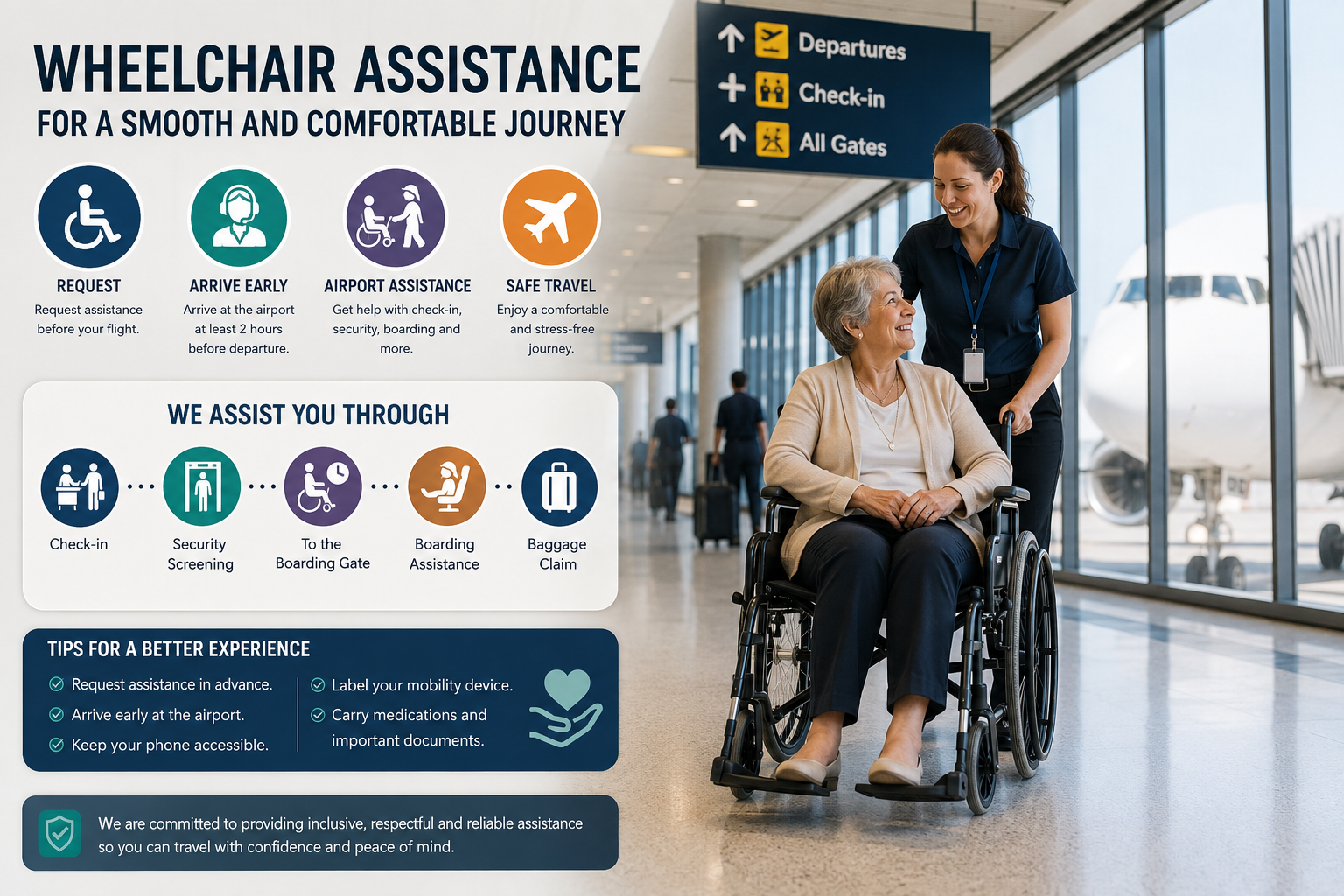
Air travel should be accessible, comfortable, and stress-free for everyone. If you or someone traveling with you requires mobility support, understanding Avelo Airlines Wheelchair Assistance before departure can make your journey significantly easier. Planning ahead helps reduce uncertainty, shortens waiting times, and ensures airport staff are prepared to provide the assistance you need.
Whether you’re traveling with a temporary injury, a permanent disability, reduced mobility, or assisting an elderly family member, knowing what services are available allows you to focus on enjoying your trip instead of worrying about airport logistics.
Accessibility in air travel has become increasingly important as more passengers seek personalized assistance. Airlines and airports work together to provide services that help travelers move safely from check-in to boarding, throughout the flight, and after arrival.
This guide explains every stage of the process, offers practical travel advice, answers common questions, and shares expert recommendations to help you prepare for a smooth journey.
Everything Covered in This Guide
- What Avelo Airlines Wheelchair Assistance includes
- Who can request mobility assistance
- How to request wheelchair assistance before your flight
- When to arrive at the airport
- What happens during check-in
- Boarding and deplaning procedures
- Traveling with personal wheelchairs
- Transporting electric mobility devices
- Passenger rights for accessible travel
- Helpful travel tips for a smoother experience
- Common mistakes to avoid
- Frequently asked questions about accessibility services
How Avelo Airlines Wheelchair Assistance Works
Wheelchair assistance is an accessibility service designed to help passengers who have difficulty walking long distances through the airport. Assistance may be needed because of age, illness, injury, surgery recovery, or a long-term mobility condition.
The service generally helps passengers navigate different parts of the airport, including:
- Ticket counters
- Security checkpoints
- Departure gates
- Boarding areas
- Arrival terminals
- Baggage claim
Many travelers assume wheelchair assistance is only for people who permanently use wheelchairs. In reality, many passengers request assistance temporarily after surgery, during pregnancy with medical approval, or while recovering from an injury.
Requesting assistance in advance allows airport staff to prepare accordingly and helps minimize delays on the day of travel.
Who Can Benefit from Avelo Airlines Wheelchair Assistance?
Wheelchair assistance is available for a wide range of travelers, not only those with permanent disabilities.
Passengers who commonly request mobility support include:
- Seniors who find long walks difficult
- Travelers recovering from surgery
- Individuals with arthritis or joint pain
- People with neurological conditions
- Passengers using crutches or walkers
- Travelers with heart or respiratory conditions
- Individuals with temporary injuries
- People traveling with personal wheelchairs or mobility scooters
Every passenger’s needs are different. Some require assistance only within the airport, while others may need help boarding and exiting the aircraft.
How to Request Avelo Airlines Wheelchair Assistance
One of the most common questions travelers ask is how to arrange wheelchair assistance before their trip.
The best approach is to request assistance as early as possible after making your reservation. Early notification gives the airline and airport teams enough time to coordinate support and prepare any required accommodations.
In most cases, passengers can request assistance by:
- Selecting accessibility services while managing a reservation, if available.
- Contacting customer support before the travel date.
- Informing an airport representative during check-in if assistance was not requested earlier.
Although same-day requests are often accommodated, advance notice generally leads to a smoother airport experience, especially during busy travel seasons.
When making your request, be prepared to explain the type of assistance you need. For example, some passengers only require transportation between check-in and the gate, while others may need help throughout the entire airport journey, including boarding and arrival assistance.
Providing accurate information helps staff arrange the most appropriate level of support and reduces the chance of delays on your travel day.
What to Expect at the Airport with Avelo Airlines Wheelchair Assistance
Arriving at the airport well before your scheduled departure gives you enough time to check in, complete security screening, and coordinate with airport staff. Travelers using wheelchair assistance often benefit from arriving at least two hours before a domestic flight, especially during holidays or peak travel periods.
Once you arrive, inform the airline representative that you have requested wheelchair assistance. If you made the request in advance, the staff can confirm your reservation and arrange for an attendant if needed. If you did not request assistance earlier, the airport team will generally try to accommodate your request based on staff availability.
A typical airport journey may include:
| Travel Stage | Assistance Available |
|---|---|
| Check-in | Help reaching the ticket counter |
| Security Screening | Guidance through the security process |
| Airport Terminal | Transportation to the departure gate |
| Boarding | Priority boarding assistance when available |
| Arrival | Help exiting the aircraft and reaching baggage claim |
| Baggage Claim | Assistance collecting checked luggage |
Knowing what to expect helps reduce stress and allows you to travel with greater confidence.
Boarding Assistance for Passengers with Reduced Mobility
Boarding an aircraft can be one of the most challenging parts of the journey for travelers with limited mobility. Airport and airline staff work together to make this process as safe and comfortable as possible.
Passengers requiring wheelchair assistance are often offered early boarding so they can settle into their seats before general boarding begins. Depending on the airport and aircraft type, staff may assist passengers using:
- Boarding ramps
- Jet bridges
- Aisle wheelchairs
- Trained airport attendants
If you require additional time to board or need assistance transferring to your seat, let the staff know before boarding begins. Clear communication helps ensure a smoother experience.
Traveling with Your Own Wheelchair or Mobility Device
Many travelers prefer to use their own wheelchair throughout the airport. Personal mobility devices are important medical equipment and are handled differently from standard baggage.
Passengers may travel with:
- Manual wheelchairs
- Folding wheelchairs
- Power wheelchairs
- Mobility scooters
- Walkers
- Canes
- Crutches
Before traveling, ensure your mobility device is clearly labeled with your name and contact information. If your wheelchair has removable accessories such as cushions or footrests, consider carrying them with you whenever practical to reduce the risk of damage or loss.
Airport staff may ask questions about your wheelchair’s size, weight, and battery type if it is powered.
Battery-Powered Wheelchairs and Mobility Scooters
Traveling with an electric wheelchair requires a little more planning than traveling with a manual wheelchair.
Important information staff may request includes:
- Battery type
- Battery specifications
- Overall dimensions
- Weight of the mobility device
- Operating instructions if special handling is required
Common battery types include:
- Lithium-ion batteries
- Sealed lead-acid batteries
- Gel-cell batteries
- Dry-cell batteries
Different battery technologies have different transportation requirements, so reviewing airline guidance before your travel date is always recommended.
Accessible Seating Considerations
Accessible seating can make a significant difference in comfort during a flight.
Passengers with reduced mobility may wish to consider seating that offers:
- Easier access to the aisle
- Additional space for transfers
- Convenient proximity to the aircraft entrance
- Comfortable access to onboard facilities
Seat assignments depend on aircraft configuration, availability, and safety regulations. If seating preferences are important, discuss your needs as early as possible after booking.
Passenger Rights During Accessible Air Travel
Passengers with disabilities are protected under accessibility regulations that prohibit discrimination and promote equal access to air transportation.
These protections generally include:
- Equal access to airline services
- Assistance during boarding and deplaning
- Transportation of mobility devices
- Accessible communication
- Reasonable accommodations for qualifying passengers
Understanding your rights helps you advocate for yourself if unexpected issues arise during your journey.
Tips for a Smooth Avelo Airlines Wheelchair Assistance Experience
Planning ahead remains the best way to reduce travel stress.
Consider these expert recommendations before your trip:
- Request assistance as early as possible.
- Verify your reservation a few days before departure.
- Arrive early at the airport.
- Carry medications in your carry-on bag.
- Label all mobility equipment.
- Keep emergency contact information accessible.
- Pack essential medical supplies separately.
- Bring charging equipment for powered mobility devices if applicable.
- Inform staff immediately if your needs change.
Small preparations often make a significant difference on travel day.
Common Mistakes Travelers Should Avoid
Many travel delays happen because passengers unintentionally overlook important preparation steps.
Avoid these common mistakes:
- Waiting until arrival to request assistance.
- Arriving late at the airport.
- Forgetting to label mobility equipment.
- Not carrying important medications onboard.
- Assuming every airport follows identical procedures.
- Failing to communicate special mobility requirements.
- Ignoring battery documentation for powered wheelchairs.
- Not confirming accessibility requests before departure.
Avoiding these mistakes helps ensure a smoother travel experience from check-in through arrival.
Helpful Answers About Avelo Airlines Wheelchair Assistance
Is wheelchair assistance free?
Airport wheelchair assistance for passengers with mobility needs is generally provided without an additional service charge.
Can I bring my own wheelchair?
Yes. Travelers may generally bring manual or powered wheelchairs and other approved mobility devices, subject to applicable safety and handling requirements.
Should I request assistance before my flight?
Yes. Requesting assistance in advance gives airport staff more time to prepare and usually results in a more efficient travel experience.
Can elderly passengers request wheelchair assistance?
Yes. Older adults who have difficulty walking long distances through the airport may request wheelchair assistance even if they do not regularly use a wheelchair.
What if I forget to request assistance?
You should notify airline staff as soon as you arrive at the airport. While assistance is often available, advance requests are recommended because same-day availability may depend on staffing and airport conditions.
Professional Advice for Accessible Air Travel
Accessibility begins long before you reach the airport. Experienced travelers who regularly use mobility assistance recommend creating a simple travel checklist before every trip.
Your checklist should include:
- Reservation confirmation
- Accessibility request confirmation
- Identification documents
- Medical information
- Mobility device labels
- Prescription medications
- Emergency contact details
- Portable chargers for medical equipment
- Weather-appropriate clothing
- Travel insurance documents if applicable
Keeping these essentials organized helps reduce stress and ensures you are prepared for unexpected situations.
Another helpful practice is communicating openly with airport staff. Let them know if you need extra time, assistance transferring, or guidance through the terminal. Clear communication allows staff to provide the most appropriate support throughout your journey.
Why Planning Ahead Makes Accessible Travel Easier
Successful accessible travel depends on preparation. Understanding the airport process, requesting assistance in advance, and knowing your rights can make your journey far more comfortable and predictable.
Whether you are traveling independently, accompanying an elderly family member, or transporting a personal mobility device, planning each stage of the trip helps minimize delays and unnecessary stress.
By preparing ahead, arriving early, and communicating your accessibility needs clearly, you can enjoy a smoother airport experience from check-in to arrival. Knowing how Avelo Airlines Wheelchair Assistance works enables travelers to approach their journey with greater confidence, comfort, and peace of mind.
Frequently Asked Questions
1. Does Avelo Airlines offer wheelchair assistance?
Yes, Avelo Airlines provides wheelchair assistance for passengers with disabilities, limited mobility, temporary injuries, or other medical conditions. Travelers are encouraged to request the service before their travel date for a smoother airport experience.
2. How do I request Avelo Airlines Wheelchair Assistance?
You can request wheelchair assistance while making your reservation, after booking by contacting customer support, or by informing airline staff at the airport. Requesting assistance in advance helps ensure the necessary arrangements are made before your flight.
3. Is Avelo Airlines Wheelchair Assistance free?
Yes, wheelchair assistance is generally provided at no additional cost for passengers who require mobility support during their airport journey.
4. Can I request wheelchair assistance after booking my flight?
Yes. If you did not request assistance during booking, you can usually add the request before your departure by contacting the airline or speaking with airport staff upon arrival.
5. How early should I arrive at the airport if I need wheelchair assistance?
It is recommended to arrive at least two hours before a domestic flight. Arriving early provides extra time for check-in, security screening, and boarding assistance.
6. Can I travel with my own wheelchair on Avelo Airlines?
Yes. Passengers may travel with their own manual or powered wheelchair, mobility scooter, walker, cane, or other approved mobility aid, subject to applicable transportation and safety requirements.
7. Does Avelo Airlines allow electric wheelchairs and mobility scooters?
Yes. Electric wheelchairs and mobility scooters are generally accepted. You may need to provide information about the battery type, size, weight, and handling instructions before travel.
8. Will I receive assistance during boarding and deplaning?
Yes. Passengers requesting wheelchair assistance are typically helped from the departure gate to the aircraft and again after landing, including assistance with exiting the aircraft and reaching baggage claim when requested.
9. Can elderly passengers request wheelchair assistance?
Absolutely. Older adults who have difficulty walking long distances through the airport can request wheelchair assistance, even if they do not regularly use a wheelchair.
10. What happens if I forget to request wheelchair assistance before my flight?
If you forget to request assistance in advance, notify airline staff as soon as you arrive at the airport. While same-day requests are often accommodated, availability may depend on staffing and airport operations.
11. Can I check my wheelchair for free?
Personal wheelchairs and other mobility devices are generally transported as assistive devices rather than standard checked baggage, subject to applicable airline policies and safety regulations.
12. Can I stay in my wheelchair until I reach the aircraft?
In many cases, passengers may use their personal wheelchair through the airport until boarding. Depending on the aircraft and airport facilities, you may then transfer to an aisle wheelchair or another boarding device.
13. Does wheelchair assistance include help through airport security?
Yes. Airport staff generally assist passengers through the security screening process while coordinating with security personnel to ensure a safe and accessible experience.
14. Can I receive wheelchair assistance after my flight lands?
Yes. If arrival assistance has been requested, airport staff typically help passengers deplane and escort them to baggage claim, ground transportation, or the airport exit.
15. What should I do before traveling with Avelo Airlines Wheelchair Assistance?
Before your trip, confirm your assistance request, arrive early, label your mobility device, carry any necessary medications in your carry-on, and keep important travel documents and emergency contact information easily accessible. These simple steps can help make your journey smoother and more comfortable.





One response to “Could Avelo Airlines Wheelchair Assistance Unlock Better Confidence Before Check-In?”
[…] Wheelchair Assistance and Mobility Support […]