
Travel should be comfortable, accessible, and stress-free for everyone. If you or someone traveling with you requires additional support, understanding Avelo Airlines Special Needs Passengers services before your journey can make the experience much smoother. From requesting wheelchair assistance and accessible boarding to traveling with mobility devices or medical equipment, planning ahead helps reduce uncertainty and ensures you receive the assistance you need.
Whether you’re flying for business, vacation, or a family visit, knowing what accessibility options are available allows you to focus on your trip instead of logistics. This guide explains the complete process, offers practical travel advice, and answers common questions so you can travel with greater confidence.
What You Need to Know
- Accessibility services available for passengers with disabilities
- How to request special assistance before your flight
- Wheelchair and mobility aid support
- Accessible boarding and deplaning procedures
- Traveling with medical devices and medications
- Tips for passengers with hearing, vision, cognitive, or mobility impairments
- Airport assistance from check-in to baggage claim
- Service animal travel guidance
- Common mistakes to avoid
- Expert travel recommendations for a smoother journey
Understanding Avelo Airlines Accessibility Services
Avelo Airlines aims to make air travel more accessible by offering a range of services for passengers who need additional assistance. These accommodations are designed to support travelers with physical, sensory, cognitive, or medical needs while complying with accessibility regulations.
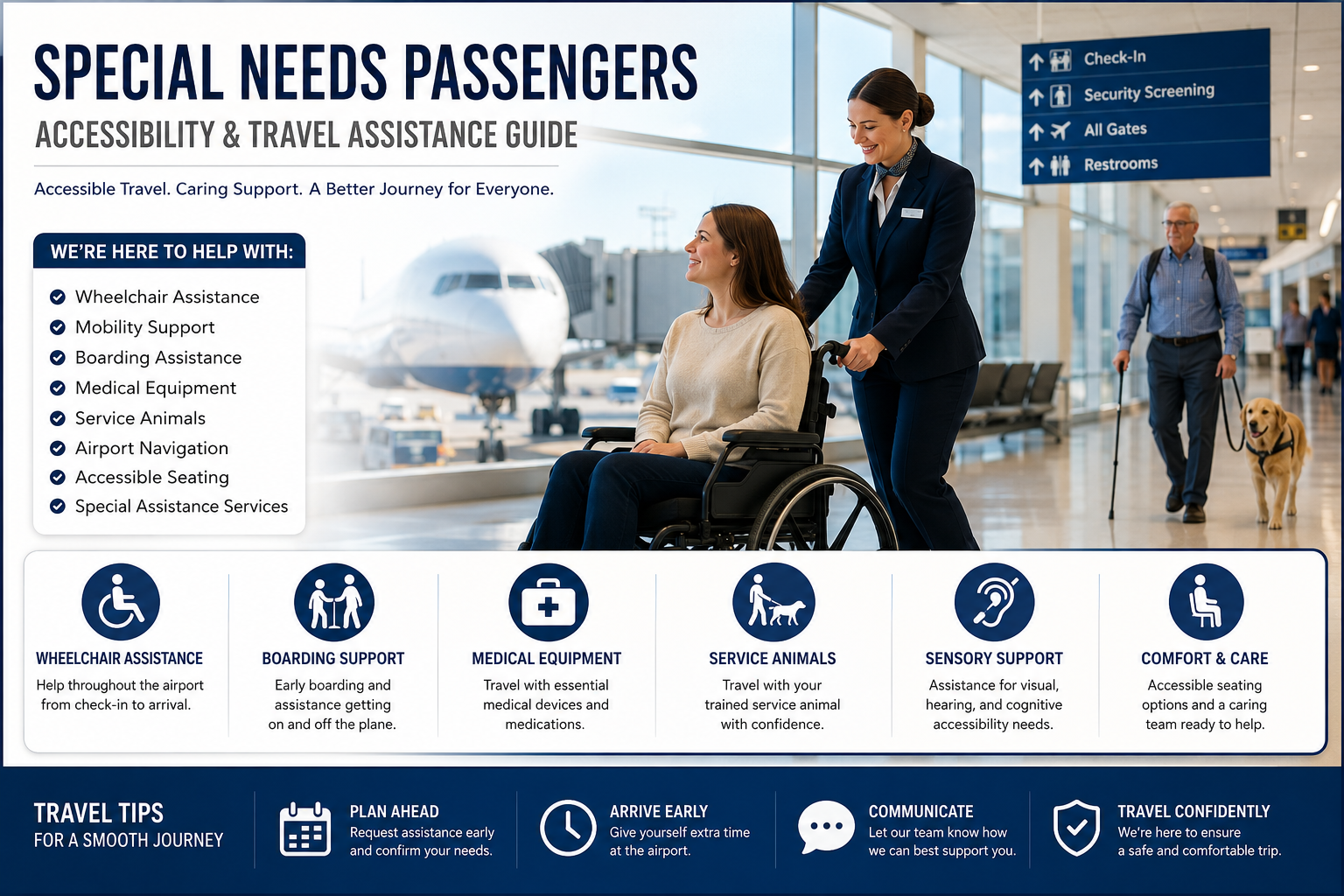
Depending on your travel requirements, assistance may include wheelchair support, help navigating the airport, early boarding, accessible seating options, and guidance during boarding and deplaning. Airport personnel can also assist passengers moving between the check-in area, security screening, departure gate, and baggage claim.
Accessibility services generally cover assistance with:
- Wheelchair requests
- Boarding and deplaning support
- Airport navigation
- Assistance for visually impaired passengers
- Help for passengers with hearing impairments
- Support for travelers with limited mobility
- Accommodation for certain medical devices
- Information about traveling with service animals
These services are intended to improve comfort and independence while helping passengers move safely through the airport and onto the aircraft.
Why Accessibility Matters
Accessible air travel is about more than convenience—it helps ensure that every passenger can travel with dignity and confidence. For individuals with mobility limitations, visual impairments, hearing loss, cognitive disabilities, or temporary injuries, timely assistance can significantly reduce stress throughout the journey.
Benefits of accessibility services include:
- Easier airport navigation
- Reduced physical strain
- More efficient boarding
- Better communication with airport staff
- Improved travel confidence
- Greater overall comfort
Expert Recommendation
Whenever possible, arrange any required assistance before your travel date. Early planning allows the airline and airport teams to better coordinate support, especially during busy travel periods.
How to Request Special Assistance on Avelo Airlines
Requesting assistance before your departure helps ensure the appropriate services are available when you arrive at the airport. If you know you’ll need support with mobility, boarding, or other accessibility needs, it’s best to communicate these requirements as early as possible.
Step-by-Step Process
- Book your flight.
- Review the accessibility services available for your journey.
- Inform the airline about your assistance requirements.
- Confirm your request before your departure date.
- Arrive at the airport with extra time.
- Speak with the check-in representative upon arrival.
- Follow staff instructions for security screening and boarding.
Information You May Be Asked to Provide
To arrange the appropriate support, you may need to share details such as:
- Type of assistance required
- Whether you use a manual or powered wheelchair
- Any mobility aids you will bring
- Information about medical equipment
- Whether you are traveling with a companion or caregiver
- Any accessibility needs during boarding or arrival
Providing accurate information in advance helps airport staff prepare suitable assistance and minimizes delays on the day of travel.
Common Mistakes to Avoid
- Waiting until arrival at the airport to request assistance
- Providing incomplete information about mobility devices
- Arriving too close to departure time
- Forgetting to verify accessibility arrangements before travel
- Assuming all airports offer identical accessibility services
Planning ahead and communicating your needs clearly can make your journey with Avelo Airlines more efficient, comfortable, and predictable.
Wheelchair Assistance and Mobility Support
Wheelchair assistance is one of the most requested accessibility services for travelers who have difficulty walking long distances through airport terminals. Whether you use a wheelchair daily or only need temporary assistance due to an injury or medical condition, planning ahead can help make your journey smoother.
Airport terminals often involve long walks, multiple checkpoints, and boarding gates located far from the entrance. Requesting wheelchair assistance in advance helps ensure trained personnel are available to assist you throughout your trip.
Wheelchair assistance may include:
- Transportation from the check-in counter to the security checkpoint
- Assistance through the airport terminal
- Help reaching the departure gate
- Support during boarding
- Assistance after landing
- Escort to baggage claim
- Help reaching the airport exit or connecting transportation
Types of Mobility Equipment
Passengers may travel with different mobility aids depending on their individual needs.
| Mobility Aid | Typical Purpose |
|---|---|
| Manual Wheelchair | Everyday mobility assistance |
| Power Wheelchair | Electric mobility support |
| Mobility Scooter | Independent transportation |
| Walker | Walking stability |
| Cane | Balance support |
| Crutches | Temporary mobility assistance |
Each mobility aid should be prepared for travel according to airline and airport guidelines, especially powered devices that may require battery-related procedures.
Preparing Your Mobility Device
Before traveling:
- Label your equipment with your contact information.
- Remove loose accessories if possible.
- Carry operating instructions for powered devices.
- Bring necessary chargers if applicable.
- Photograph your equipment before departure.
- Inform airport staff of any special handling requirements.
Expert Insight
Many experienced travelers recommend arriving earlier than standard check-in times when traveling with mobility equipment. Extra time allows airport staff to properly inspect, tag, and prepare wheelchairs or scooters without unnecessary stress.
Boarding Assistance and Accessible Seating
Boarding an aircraft can be challenging for passengers with mobility limitations, balance concerns, or sensory disabilities. Boarding assistance helps ensure passengers safely enter the aircraft while receiving any additional support they require.
Passengers needing extra assistance are often encouraged to identify themselves at the departure gate before boarding begins.
Boarding assistance may include:
- Early boarding opportunities
- Escort from the gate
- Assistance entering the aircraft
- Support locating assigned seats
- Help storing assistive devices
- Additional boarding time
Benefits of Early Boarding
Early boarding offers several advantages.
- More time to settle comfortably.
- Reduced crowding.
- Easier communication with cabin crew.
- Better organization of medical equipment.
- Less pressure during boarding.
- Improved overall travel experience.
Accessible Seating Considerations
When selecting seats, passengers should consider:
- Ease of entering and exiting the row.
- Distance from the aircraft entrance.
- Proximity to the lavatory when available.
- Personal mobility requirements.
- Medical needs during the flight.
Common Boarding Challenges
Some passengers mistakenly wait until boarding begins to notify gate agents about accessibility needs. Speaking with gate staff well before boarding starts allows assistance to be organized efficiently and reduces delays.
Traveling With Medical Equipment and Medications
Many travelers rely on medical equipment throughout their journey. Proper planning ensures these essential items remain available whenever needed.
Medical equipment can vary significantly depending on individual health requirements.
Examples include:
- CPAP machines
- Portable oxygen concentrators (when permitted)
- Nebulizers
- Blood glucose monitors
- Medication coolers
- Insulin supplies
- Mobility supports
- Hearing devices
Travel Preparation Checklist
Before leaving for the airport:
- Pack medications in your carry-on bag.
- Keep prescriptions easily accessible.
- Bring extra medication in case of delays.
- Carry medical documentation if appropriate.
- Pack spare batteries for approved medical devices.
- Organize cables and chargers.
- Keep emergency contact information available.
Medication Tips
For a smoother experience:
- Keep medicines in their original packaging whenever possible.
- Separate daily medications from checked baggage.
- Carry enough medication for unexpected delays.
- Store temperature-sensitive medication appropriately.
- Inform security officers if carrying medically necessary liquids.
Practical Example
Imagine a traveler who uses a CPAP machine every night. Instead of packing it in checked luggage, they place it in their carry-on, carry the power adapter, and ensure the equipment is protected in a padded travel case. This simple preparation reduces the risk of damage and ensures access if luggage is delayed.
Assistance for Passengers With Visual, Hearing, and Cognitive Disabilities
Accessibility involves much more than physical mobility. Many travelers benefit from communication support, orientation assistance, or additional guidance throughout their journey.
Assistance for Passengers With Vision Loss
Travelers with visual impairments may request assistance navigating the airport.
Support may include:
- Guidance through the terminal.
- Escort to security screening.
- Assistance locating departure gates.
- Boarding guidance.
- Help reaching baggage claim.
Helpful travel tips include:
- Travel with identification labels on luggage.
- Keep important items in consistent locations.
- Inform airport staff about assistance needs.
- Arrive early to reduce time pressure.
Assistance for Passengers With Hearing Loss
Passengers who are deaf or hard of hearing may prefer visual communication.
Helpful practices include:
- Informing airport staff of communication preferences.
- Monitoring airport display screens.
- Using written communication when necessary.
- Keeping mobile devices charged for messaging.
Assistance for Passengers With Cognitive or Developmental Disabilities
Air travel can involve unfamiliar environments, changing schedules, and sensory overload.
Preparation strategies include:
- Reviewing airport layouts before departure.
- Creating a simple travel schedule.
- Bringing comfort items.
- Traveling with a companion if needed.
- Allowing additional time at each stage.
Reducing Travel Anxiety
Simple preparation often improves confidence.
Consider:
- Visiting the airport website beforehand.
- Packing familiar snacks.
- Wearing comfortable clothing.
- Keeping travel documents organized.
- Preparing for possible schedule changes.
Traveling With a Companion or Caregiver
Many passengers choose to travel with a family member, caregiver, or trusted companion who can provide additional support during the journey.
A travel companion can assist with:
- Navigating the airport.
- Managing travel documents.
- Carrying personal belongings.
- Communicating with airport staff.
- Organizing medications.
- Providing emotional reassurance.
Planning Together
Before departure, discuss:
- Boarding procedures.
- Medication schedules.
- Emergency contacts.
- Airport meeting locations.
- Luggage responsibilities.
- Transportation after arrival.
Helpful Communication Tips
Good communication with airport staff makes the travel experience smoother.
Remember to:
- Explain your assistance needs clearly.
- Ask questions whenever uncertain.
- Notify staff if your condition changes.
- Confirm assistance before boarding.
- Request clarification if announcements are difficult to hear or understand.
Expert Recommendations for a Stress-Free Journey
Travel experts consistently recommend preparation as the key to accessible flying.
Best practices include:
- Request assistance well before your departure.
- Double-check all travel confirmations.
- Arrive at the airport earlier than usual.
- Keep medications within easy reach.
- Carry important medical information.
- Pack essential items in your carry-on baggage.
- Label all mobility equipment.
- Charge electronic medical devices before traveling.
- Save important customer service contact numbers.
- Stay informed about flight updates before leaving for the airport.
Service Animals and Accessibility Support
Passengers who rely on a trained service animal should prepare for their trip well in advance. Understanding the documentation requirements, airport procedures, and onboard expectations can help ensure a comfortable journey for both the passenger and the animal.
Before traveling, it’s a good idea to review the airline’s latest accessibility requirements and confirm any documentation that may be needed.
Tips for Traveling With a Service Animal
- Verify current travel requirements before departure.
- Keep identification and required paperwork accessible.
- Bring enough food and water for the journey.
- Carry waste disposal supplies.
- Use a secure leash or harness.
- Allow the animal time for exercise before arriving at the airport.
- Arrive early to complete check-in smoothly.
Best Practices During the Flight
- Keep the service animal under your control at all times.
- Follow crew instructions regarding seating and safety.
- Avoid blocking aisles or emergency exits.
- Carry comfort items such as a small blanket or mat if appropriate.
- Plan for longer travel days by bringing additional supplies.
Airport Journey for Special Needs Passengers
Knowing what to expect at every stage of the airport experience can reduce stress and make traveling easier.
Before Leaving Home
Preparation begins before you even reach the airport.
Checklist:
- Confirm your flight details.
- Verify your assistance request.
- Pack medications and medical documents.
- Charge electronic medical devices.
- Label mobility equipment.
- Pack chargers and spare batteries.
- Prepare snacks and water if appropriate.
- Keep travel documents easily accessible.
At the Check-In Counter
When you arrive at the airport:
- Inform the representative that you requested assistance.
- Confirm wheelchair or escort services if needed.
- Check mobility equipment according to airline procedures.
- Ask questions about boarding times.
- Verify your gate information.
Security Screening
Passengers with disabilities or medical equipment may require additional screening procedures.
Helpful tips include:
- Inform security officers about medical devices before screening.
- Notify officers if you cannot stand for extended periods.
- Explain any medical implants or mobility aids.
- Allow extra time during busy travel periods.
At the Departure Gate
Once you arrive at your gate:
- Speak with the gate representative.
- Confirm your boarding assistance.
- Ask about early boarding if applicable.
- Stay near the boarding area.
- Monitor announcements and display screens.
During Boarding
Boarding is often easier when assistance has been arranged beforehand.
Airport staff may help with:
- Entering the aircraft.
- Carrying small personal items.
- Reaching your assigned seat.
- Storing assistive equipment when appropriate.
After Landing
Following arrival:
- Remain seated if instructed while assistance is arranged.
- Wait for mobility equipment if it was checked.
- Meet airport assistance personnel.
- Proceed to baggage claim.
- Continue to your onward transportation.
Common Challenges and How to Avoid Them
Even experienced travelers occasionally encounter unexpected situations. Planning ahead significantly reduces the likelihood of disruptions.
| Challenge | Practical Solution |
|---|---|
| Forgetting to request assistance | Arrange support before departure |
| Arriving late | Reach the airport early |
| Missing medical supplies | Pack essentials in carry-on baggage |
| Poor communication | Clearly explain your accessibility needs |
| Damaged mobility equipment | Label equipment and photograph it before travel |
| Flight delays | Carry extra medication and snacks |
| Gate changes | Stay alert to airport announcements |
| Lost baggage | Keep essential medical items with you |
How to Make Your Accessible Journey More Comfortable
Frequent travelers and accessibility specialists recommend these simple but effective strategies:
- Travel during less crowded times when possible.
- Wear comfortable clothing and supportive footwear.
- Keep emergency contacts on your phone and in printed form.
- Use luggage tags with your name and phone number.
- Download your boarding pass before arriving at the airport.
- Carry a portable phone charger.
- Stay hydrated throughout your trip.
- Keep valuables and medications in your personal item.
- Inform staff immediately if you require additional assistance.
- Remain flexible in case of weather or operational delays.
Accessibility Travel Checklist
Use this checklist before every flight.
Documents
- Government-issued identification
- Boarding pass
- Medical documentation (if needed)
- Emergency contact information
- Travel itinerary
Medical Essentials
- Prescription medications
- Medical devices
- Spare batteries
- Chargers
- Prescription copies
- First-aid supplies
Mobility Equipment
- Wheelchair or walker
- Cane or crutches
- Repair tools if applicable
- Protective covers
- Identification labels
Personal Comfort Items
- Water bottle (fill after security)
- Snacks
- Neck pillow
- Blanket
- Headphones
- Eye mask
- Reading materials
Frequently Asked Questions
What assistance is available for Avelo Airlines Special Needs Passengers?
Passengers may request services such as wheelchair assistance, airport escort support, boarding assistance, help with mobility devices, and accommodations for certain medical or accessibility needs.
How do I request special assistance before my flight?
You should notify the airline as early as possible after booking your reservation and confirm your request before your departure date.
Is wheelchair assistance available at the airport?
Yes. Passengers who need help moving through the terminal can request wheelchair assistance for check-in, security, boarding, arrival, and baggage claim.
Can I bring my own wheelchair?
Yes. Travelers can generally travel with personal mobility equipment, including manual wheelchairs, power wheelchairs, mobility scooters, walkers, and canes, subject to airline handling procedures.
Can I travel with medical equipment?
Essential medical equipment and medications can generally be carried during your trip. Keep important medical items in your carry-on baggage whenever possible.
Are service animals permitted?
Qualified service animals may travel with eligible passengers in accordance with applicable airline policies and regulatory requirements.
How early should I arrive if I need accessibility assistance?
Arriving earlier than the standard recommended check-in time gives airport staff enough time to coordinate requested services and reduces last-minute stress.
Can a caregiver travel with me?
Yes. Many passengers travel with caregivers, family members, or companions who assist throughout the airport and flight experience.
What should I do if my mobility equipment is damaged?
Report the issue immediately to airline representatives before leaving the airport and keep photographs or documentation of the equipment to support your report.
What should I pack in my carry-on?
Carry medications, medical devices, chargers, travel documents, emergency contacts, valuables, and any items you’ll need during the flight.