
Parents naturally have concerns when their child needs to travel alone. Safety, airline policies, airport procedures, and required documents are all important factors to consider before booking a flight. Understanding the Avelo Airlines unaccompanied minor policy helps families make informed travel decisions while reducing stress on the day of departure.
Although airline policies may vary, every parent should understand the minimum travel age, documentation requirements, airport check-in procedures, baggage rules, and arrival expectations before allowing a child to fly independently. Being prepared helps avoid delays and ensures a smoother travel experience.
Whether your child is traveling to visit family, attend school events, or enjoy a vacation, knowing what to expect at every stage of the journey makes the process much easier.
Everything You’ll Discover
- What the Avelo Airlines unaccompanied minor policy means
- Whether children can fly alone
- Minimum age requirements for solo travelers
- Eligibility guidelines for minors
- Required travel documents
- Airport check-in procedures
- Boarding and arrival expectations
- Safety recommendations for parents
- Common mistakes to avoid
- Tips for making a child’s first solo flight successful
What Is an Avelo Airlines Unaccompanied Minor?
An Avelo Airlines unaccompanied minor refers to a child traveling without a parent, legal guardian, or another responsible adult on the same flight. Different airlines establish their own rules regarding the minimum age for independent travel, eligibility requirements, and whether supervised assistance is available during the journey.
For parents, understanding these rules before purchasing a ticket is essential because age restrictions, documentation, and airport procedures can affect whether a child is eligible to travel alone.
Generally, airlines evaluate several factors before allowing solo child travel, including:
- The child’s age
- Flight type
- Airport capabilities
- Safety considerations
- Required identification
- Guardian contact information
Reviewing these factors before booking can prevent unexpected travel issues.
Does Avelo Airlines Allow Children to Fly Alone?
Parents often search for this question before planning travel.
The answer depends on the airline’s current travel policies, minimum age requirements, and whether dedicated assistance is offered for young travelers. Since airline policies may change over time, families should always review the latest travel requirements before confirming a reservation.
When evaluating whether a child can travel independently, parents should consider:
- Child’s maturity level
- Length of the trip
- Flight schedule
- Weather conditions
- Airport size
- Emergency contacts
- Destination arrangements
Even if a child meets the minimum age requirement, parents should ensure the child understands basic travel procedures such as checking boarding information, following airport signs, listening to announcements, and asking airline staff for assistance if necessary.
Who Qualifies? Avelo Airlines Unaccompanied Minor Age Requirements
Age is one of the most important factors when determining whether a child can travel independently.
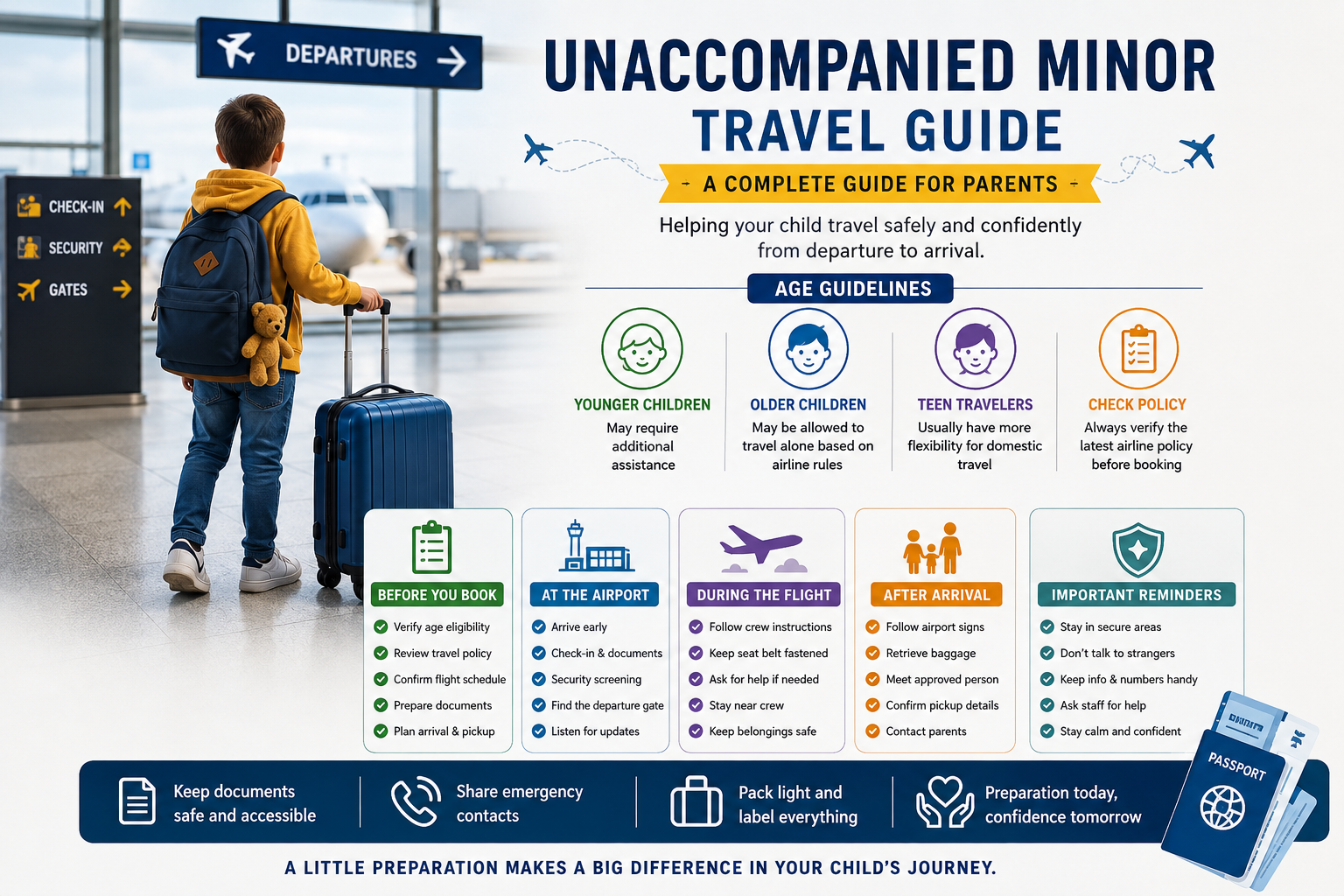
Many airlines classify young travelers into different age groups because each category has different supervision requirements.
| Age Group | Typical Travel Consideration |
|---|---|
| Under minimum eligible age | Usually not permitted to travel alone |
| Younger children | May require additional airline assistance if available |
| Older children | Often permitted to travel independently depending on airline rules |
| Teen travelers | Usually have greater flexibility for domestic travel |
Parents should remember that eligibility depends not only on age but also on the airline’s policies and the specific flight itinerary.
Before booking, verify:
- Passenger age
- Flight schedule
- Airport restrictions
- Destination requirements
- Identification needs
- Emergency contact details
Taking a few extra minutes to verify eligibility can prevent denied boarding on the day of travel.
Why Parents Should Understand the Avelo Airlines Unaccompanied Minor Policy Before Booking
Booking a ticket without reviewing the airline’s child travel rules can lead to unexpected problems.
Some of the most common issues include:
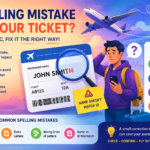
- Incorrect passenger age entered during booking
- Missing identification
- Incomplete emergency contact information
- Guardian unavailable during check-in
- Arrival pickup delays
- Flight schedule misunderstandings
Reading the airline’s child travel policy beforehand allows families to prepare every required document and understand each step of the travel process.
Parents should also discuss the trip with their child before departure. Explaining airport security, boarding announcements, seat numbers, restroom locations, and how to ask airline employees for help can greatly increase a child’s confidence while traveling independently.
Preparing children in advance often makes their first solo flight a much more comfortable and positive experience.
Required Documents for a Child Traveling Alone
Having the correct travel documents is one of the most important parts of preparing a child for air travel. Even on domestic flights, parents should ensure that all necessary information is available before arriving at the airport.
Depending on the child’s age, destination, and airline requirements, the following documents may be helpful or required:
- Flight confirmation or e-ticket
- Boarding pass
- Government-issued identification, if applicable
- Parent or guardian contact information
- Emergency contact details
- Medical information, if relevant
- Any required consent or authorization forms
- Destination address and phone number
Parents should double-check all information for accuracy before travel. Incorrect names, outdated phone numbers, or missing paperwork can delay the check-in process.
Keeping digital and printed copies of important documents provides additional peace of mind in case a mobile device loses power or internet access.
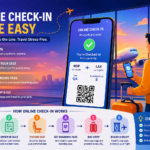
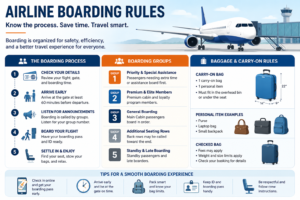
Airport Check-In Process for Young Travelers
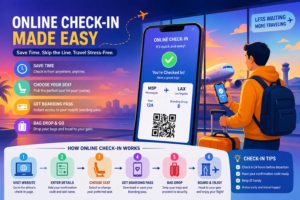
Arriving at the airport early gives families enough time to complete check-in, pass through security, and become familiar with the departure gate.
A typical airport experience includes several steps.
- Arrive well before the scheduled departure.
- Visit the airline check-in counter if assistance is needed.
- Verify travel documents.
- Check baggage, if applicable.
- Proceed through airport security.
- Locate the departure gate.
- Listen for boarding announcements.
- Board the aircraft when instructed.
Parents should remain at the airport until the flight has departed unless advised otherwise by airline staff. This allows them to assist if unexpected schedule changes occur before takeoff.
Teaching children to recognize gate numbers, flight displays, and airline uniforms can also make navigating the airport less stressful.
Preparing Your Child Before the Flight
Preparation often determines whether a child’s first solo flight is enjoyable or overwhelming.
Children who know what to expect usually feel more confident throughout the journey.
Before travel, explain:
- How airport security works
- Why boarding passes are important
- How to locate their assigned seat
- How to fasten a seat belt
- When electronic devices may be used
- How to request assistance from flight attendants
- What to do if plans change
Parents can also practice simple travel scenarios at home.
For example:
- Finding a boarding gate
- Reading a boarding pass
- Listening for announcements
- Asking an airport employee for help
- Staying calm during delays
Role-playing these situations helps reduce anxiety and builds confidence before travel day.
Tips for Parents Sending a Child on Their First Solo Flight
A child’s first independent flight is a significant milestone. Careful planning can make the experience smoother for everyone involved.
Helpful tips include:
- Choose nonstop flights whenever possible.
- Schedule daytime departures.
- Pack only essential belongings.
- Label every bag clearly.
- Include emergency phone numbers.
- Pack snacks if permitted.
- Charge electronic devices fully.
- Pack portable chargers.
- Dress children comfortably.
- Review airport maps before arrival.
Many parents also place important contact information inside the child’s carry-on bag in case luggage tags become detached.
Discussing expectations ahead of time helps children remain calm if minor travel disruptions occur.
Safety Tips for Children Traveling Alone
Safety begins long before boarding.
Parents should remind children to:
- Stay near authorized airline staff.
- Never leave the secure airport area without permission.
- Avoid accepting food or gifts from strangers.
- Keep personal belongings nearby.
- Follow crew instructions.
- Report any concerns immediately.
- Keep emergency contacts accessible.
Children should also understand that flight attendants are trained to assist passengers and can answer questions throughout the flight.
Reassuring children that it is okay to ask for help encourages them to seek assistance whenever needed.
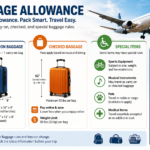
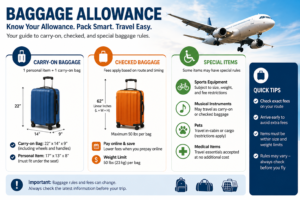
Baggage Guidelines for Young Travelers
Packing appropriately makes travel easier.
Children should avoid carrying heavy luggage whenever possible.
Recommended carry-on items include:
- Boarding documents
- Identification
- Water bottle after security, where permitted
- Healthy snacks
- Books or coloring materials
- Headphones
- Small blanket
- Sweater
- Medication
- Phone charger
Checked baggage should include:
- Extra clothing
- Shoes
- Toiletries
- Larger personal items
Parents should label every piece of luggage with:
- Child’s name
- Parent’s phone number
- Destination contact
- Return address if appropriate
Bright luggage tags also make baggage easier to identify upon arrival.
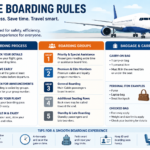
What Happens During Boarding and the Flight?
Boarding can feel unfamiliar to first-time young travelers, but understanding the process beforehand helps reduce uncertainty.
During boarding, passengers typically:
- Wait for their boarding group to be called.
- Present their boarding pass.
- Walk through the boarding gate.
- Enter the aircraft.
- Find their assigned seat.
- Store carry-on belongings safely.
- Fasten their seat belt.
During the flight, children should:
- Listen carefully to safety instructions.
- Remain seated when the seat belt sign is on.
- Follow crew directions.
- Keep valuables secure.
- Use the call button if assistance is needed.
Flight attendants are available throughout the journey and can help with simple questions or concerns.
Arrival Procedures After Landing
The travel process continues even after the aircraft lands.
Children should remain patient while passengers leave the aircraft and follow airport signs toward baggage claim or the designated pickup location.
Important arrival tips include:
- Stay inside the airport terminal.
- Follow airline or airport instructions.
- Retrieve checked baggage if necessary.
- Meet the approved pickup person.
- Verify the person’s identity if instructed.
- Contact parents if plans change.
Parents should ensure the individual meeting the child knows the flight number, arrival time, and airport terminal before departure.
Clear communication between everyone involved reduces confusion after landing.
Common Mistakes Families Should Avoid
Many travel problems can be prevented with proper planning.
Some of the most common mistakes include:
- Waiting until the last minute to review airline policies.
- Arriving late at the airport.
- Forgetting travel documents.
- Packing prohibited items.
- Entering incorrect passenger information.
- Using outdated emergency contact numbers.
- Not discussing airport procedures with the child.
- Choosing complicated travel itineraries.
- Packing bags that are too heavy.
- Failing to label luggage.
Avoiding these mistakes helps create a smoother travel experience from departure to arrival.
Professional Advice for Hassle-Free Solo Child Travel
Travel professionals consistently recommend planning ahead rather than making last-minute arrangements.
Some best practices include:
- Book flights several weeks in advance when possible.
- Select morning or afternoon departures to reduce the chance of overnight disruptions.
- Monitor flight updates before leaving for the airport.
- Save digital copies of travel documents.
- Keep printed copies as backups.
- Encourage children to stay calm and communicate with airline employees if they need assistance.
- Review airport layouts online before travel.
- Keep phones fully charged throughout the journey.
According to aviation safety experts, preparation is one of the most effective ways to reduce travel stress for both children and parents. A well-informed traveler is more likely to navigate the airport confidently, follow instructions, and enjoy a smoother overall experience.
Frequently Asked Questions
Can a child travel alone on Avelo Airlines?
Whether a child can travel alone depends on the airline’s current age requirements and travel policies. Parents should review the latest guidelines before booking to confirm eligibility and understand any restrictions that may apply.
What is the minimum age for a child to fly alone?
The minimum age varies by airline. Before purchasing a ticket, verify the current policy to determine whether the child’s age meets the airline’s requirements for independent travel.
Does a child need identification for domestic travel?
Identification requirements depend on the child’s age and the type of trip. While young children may not always need government-issued identification for domestic flights, carrying proof of identity and travel documents is a good practice.
Should parents arrive early at the airport?
Yes. Arriving at least two hours before departure allows enough time for check-in, baggage drop, security screening, and any additional procedures that may be required for young travelers.
What should a child pack in a carry-on bag?
A carry-on bag should include travel documents, snacks, a refillable water bottle after security if permitted, entertainment, medications, a phone charger, headphones, and emergency contact information.
What happens if the flight is delayed?
Parents and guardians should monitor flight updates and maintain communication with the receiving adult. Children should remain inside the secure airport area and seek assistance from airline personnel whenever necessary.
Can a child bring checked baggage?
Yes, children are generally allowed to travel with checked baggage if it complies with the airline’s baggage size and weight limits. Labeling every bag with contact information is highly recommended.
What should parents teach children before traveling?
Children should know how to read a boarding pass, recognize their departure gate, follow airport announcements, keep their belongings secure, and ask airline employees for assistance whenever they feel uncertain.
Is solo air travel safe for children?
Solo travel can be a positive experience when children are well prepared. Reviewing airport procedures, discussing safety expectations, and ensuring all travel documents are ready before departure help create a smoother journey.
What is the biggest mistake parents make?
One of the most common mistakes is waiting until the travel day to review airline policies. Confirming age requirements, travel documents, baggage rules, and arrival arrangements well in advance helps prevent unnecessary delays.