
Traveling is exciting, but discovering a damaged suitcase at baggage claim can quickly turn a pleasant trip into a stressful experience. Whether your luggage has broken wheels, a cracked shell, torn fabric, or damaged handles, knowing how to respond can make a significant difference in resolving the issue. Understanding Avelo Airlines Damaged Baggage procedures helps passengers report the problem promptly, provide the right documentation, and improve their chances of receiving assistance or compensation.
Although airlines take extensive measures to transport checked baggage safely, luggage passes through multiple handling systems, conveyor belts, carts, and loading equipment before reaching its destination. Minor cosmetic marks are common, but significant damage should be reported as soon as possible. Acting quickly is one of the most important steps toward a successful baggage claim.
What This Article Explains
- What Avelo Airlines Damaged Baggage means
- Common reasons luggage gets damaged
- Types of baggage damage covered by airlines
- Step-by-step baggage damage reporting process
- Documents required for filing a claim
- Compensation and reimbursement information
- Common reasons baggage claims are denied
- Expert tips to protect your luggage
- Frequently asked questions about damaged baggage
Why Does Checked Baggage Get Damaged on Avelo Airlines?
Avelo Airlines Damaged Baggage refers to checked luggage that is returned to a passenger in a damaged condition after a flight. This may include broken wheels, cracked hard-shell suitcases, torn fabric, damaged handles, broken zippers, or structural damage caused during baggage handling.
Not every scratch or scuff qualifies for compensation. Airlines generally distinguish between significant damage that affects the usability of luggage and normal wear resulting from regular travel.
Examples of reportable baggage damage include:
- Broken wheels
- Missing handles
- Cracked suitcase shells
- Torn luggage fabric
- Broken telescopic handles
- Large punctures
- Severe zipper damage
- Structural frame damage
Examples generally considered normal wear include:
- Minor scratches
- Small dents
- Dirt marks
- Slight fabric scuffs
- Normal aging of luggage
Understanding this difference helps passengers determine whether filing a baggage claim is appropriate.
Why Does Checked Baggage Get Damaged?
Modern airports process thousands of bags every day. Each suitcase passes through several handling stages before reaching baggage claim.
Common causes of baggage damage include:
- Conveyor belt systems
- Manual baggage handling
- Aircraft loading equipment
- Heavy luggage stacked together
- Tight cargo compartments
- Weather conditions during loading
- Long connecting itineraries
- Older or overfilled suitcases
For example, a hard-shell suitcase may crack if heavy baggage is stacked on top of it, while soft luggage may experience torn fabric after repeated handling.
Although these situations are relatively uncommon, they highlight the importance of inspecting your baggage immediately after collecting it.
How to Inspect Your Luggage Before Leaving the Airport
One of the biggest mistakes travelers make is leaving the airport without checking their luggage. Once you leave the baggage claim area, proving that damage occurred during transportation becomes more difficult.
Carefully inspect your suitcase for:
- Cracks in the shell
- Broken wheels
- Bent pull handles
- Torn fabric
- Damaged zippers
- Missing locks
- Broken straps
- Deep punctures
- Missing baggage tags
If possible, compare your luggage with photos taken before your trip. These images can provide useful evidence if you need to file a claim.
Expert Recommendation
Spend two to three minutes examining every side of your luggage before exiting the airport. Detecting damage immediately can simplify the reporting process and reduce delays in resolving your claim.
Steps to Report Avelo Airlines Damaged Baggage
Reporting damaged baggage promptly increases the likelihood of a smooth resolution.
Follow these steps:
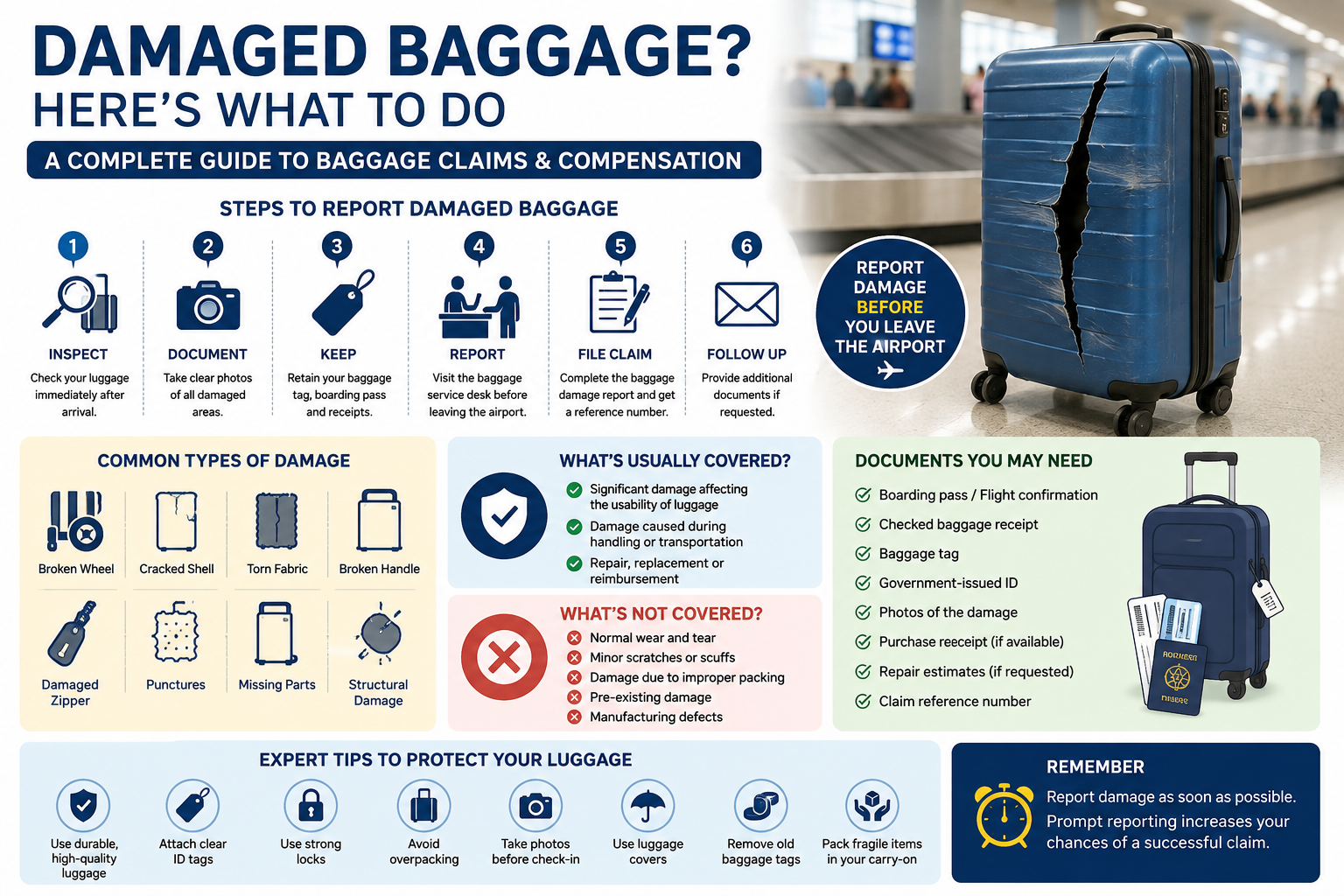
- Inspect your luggage immediately after collecting it.
- Take clear photos of all visible damage.
- Keep your baggage tag and boarding pass.
- Visit the airport baggage service desk before leaving the terminal whenever possible.
- Explain the damage clearly to the airline representative.
- Complete any required baggage damage report.
- Request a copy or reference number for your claim.
- Keep receipts if emergency repairs are necessary.
- Monitor updates regarding your claim.
- Respond promptly if additional documentation is requested.
Passengers who provide complete documentation often experience fewer delays during the claim process.
Documents Required for a Avelo Airlines Damaged Baggage Claim
Preparing the correct documents helps support your request and speeds up claim verification.
Typical documentation includes:
- Boarding pass
- Flight confirmation
- Government-issued identification
- Checked baggage receipt
- Baggage tag
- Photos of the damaged luggage
- Purchase receipt for the suitcase, if available
- Repair estimates when requested
- Claim reference number
- Contact information
Keeping digital copies of these documents before traveling can make the claims process much easier, especially if paperwork is misplaced during the journey.
Baggage Damage Claims and Compensation Guide
Passengers often want to know whether they will receive compensation for damaged luggage. The answer depends on several factors, including the extent of the damage, whether it occurred while the bag was under the airline’s responsibility, and whether the damage falls within the airline’s baggage policy.
In many situations, airlines evaluate the claim before determining the most appropriate resolution. Depending on the circumstances, assistance may include:
- Repairing the damaged luggage
- Replacing the suitcase with a comparable model
- Offering reimbursement based on the luggage’s value
- Providing compensation when repairs are not possible
The outcome varies from case to case, so passengers should submit complete documentation and cooperate throughout the claim process.
What Damage May Not Be Covered?
Not every damaged suitcase qualifies for compensation. Airlines generally exclude issues that result from ordinary use or improper packing.
Examples of damage that may not be covered include:
- Normal wear and tear
- Minor scratches
- Small dents
- Scuffed corners
- Faded fabric
- Broken items caused by inadequate packing
- Damage to fragile items packed without protection
- Damage caused by manufacturing defects
- Pre-existing suitcase damage
Knowing these limitations helps travelers set realistic expectations before filing a claim.
How Long Does a Avelo Airlines Damaged Baggage Claim Take?
The timeline varies depending on the complexity of the claim and the supporting documents provided.
Several factors can affect processing time:
- Completeness of submitted documents
- Severity of luggage damage
- Need for baggage inspection
- Verification of purchase receipts
- Repair estimates
- Peak travel seasons
- Additional information requests
Passengers can help speed up the process by responding quickly to requests for additional documentation and keeping copies of all correspondence.
Common Reasons Baggage Claims Are Rejected
Many baggage claims are denied because important steps were missed during the reporting process.
Common reasons include:
- Reporting the damage too late
- Leaving the airport without notifying airline staff
- Missing baggage tags
- Lack of photographs
- Incomplete claim forms
- Insufficient proof of ownership
- Claiming normal wear and tear
- Missing receipts for expensive luggage
- Inconsistent information on submitted documents
Avoiding these mistakes greatly improves the likelihood of a successful claim.
Tips to Protect Your Luggage During Travel
Although baggage damage cannot always be prevented, travelers can reduce the risk by preparing their luggage carefully before departure.
Consider these practical tips:
- Choose durable luggage with reinforced corners.
- Use high-quality luggage made from impact-resistant materials.
- Attach a sturdy luggage tag with your contact details.
- Remove old baggage tags before each trip.
- Secure loose straps and handles.
- Avoid overpacking your suitcase.
- Use TSA-approved locks where appropriate.
- Pack fragile items in carry-on baggage whenever possible.
- Take photos of your luggage before check-in.
- Keep receipts for valuable suitcases and travel accessories.
These simple habits can make a significant difference if damage occurs.
Avelo Airlines Damaged Baggage and Travel Insurance
Travel insurance may provide an additional layer of protection beyond the airline’s baggage policy. Some policies cover luggage repair, replacement, or reimbursement for eligible baggage damage.
Before traveling, review your policy carefully to understand:
- Coverage limits
- Claim deadlines
- Required documentation
- Exclusions
- Deductibles
- Coverage for expensive luggage and personal belongings
If both airline assistance and travel insurance apply, follow the reporting procedures for each provider.
What to Do if Valuable Items Were Inside the Bag
Passengers sometimes discover that electronic devices, cameras, jewelry, or other valuables inside checked baggage have also been damaged.
If this happens:
- Document the damage with clear photographs.
- Do not discard the damaged items.
- Save purchase receipts if available.
- Report both luggage and contents damage immediately.
- Check whether travel insurance provides additional coverage.
- Follow the claim instructions provided by the airline and your insurer.
Whenever possible, expensive electronics, medications, passports, and important documents should remain in your carry-on baggage instead of checked luggage.
Expert Recommendations for a Smooth Baggage Claim
Frequent travelers and aviation professionals recommend preparing for baggage issues before your journey begins.
Best practices include:
- Photograph your suitcase before every flight.
- Save digital copies of your itinerary and baggage receipts.
- Label luggage clearly inside and outside.
- Arrive at the airport early to avoid rushed check-in.
- Inspect baggage immediately after arrival.
- Report problems before leaving the airport.
- Keep every document related to your claim.
- Follow up politely if updates are delayed.
- Maintain copies of emails and claim reference numbers.
- Understand the airline’s baggage policy before departure.
Being organized often leads to faster claim resolution.
Quick Reference Table for Damaged Baggage Claims
| Situation | Recommended Action |
|---|---|
| Broken wheel | Photograph the damage and report it immediately |
| Cracked suitcase shell | Visit the baggage service desk before leaving the airport |
| Torn luggage fabric | Complete a baggage damage report with supporting photos |
| Broken handle | Keep baggage tags and request a claim reference number |
| Damaged zipper | Document the issue and retain repair estimates if required |
| Missing baggage tag | Provide flight details and identification for verification |
| Valuable item damaged | Report the item separately and check insurance coverage |
| Cosmetic scratches | Understand that normal wear may not qualify for compensation |
Frequently Asked Mistakes Travelers Make
Many travelers unintentionally weaken their claims by making avoidable mistakes.
Some of the most common include:
- Throwing away baggage tags
- Forgetting to photograph the damage
- Delaying the report until returning home
- Losing boarding passes
- Packing fragile items without adequate protection
- Ignoring airline claim instructions
- Failing to save repair receipts
- Assuming every type of damage qualifies for reimbursement
Taking a few extra minutes at the airport can prevent these problems.
Why Prompt Reporting Matters
Timely reporting is one of the most important aspects of a damaged baggage claim. The sooner the issue is documented, the easier it is to establish that the damage occurred while the baggage was in the airline’s care.
Prompt reporting also allows airline representatives to inspect the luggage, verify the condition, collect necessary information, and begin the review process without unnecessary delays.
For travelers, acting quickly reduces uncertainty and increases the likelihood of an efficient resolution.
Frequently Asked Questions
What should I do if my luggage is damaged after an Avelo Airlines flight?
Inspect your luggage before leaving the baggage claim area. Take clear photographs of the damage, keep your baggage tag and boarding pass, and report the issue to the airport baggage service desk as soon as possible. Prompt reporting helps ensure the airline can inspect the luggage and begin the claim process.
Does Avelo Airlines compensate passengers for damaged baggage?
Compensation depends on the circumstances of the damage and whether it falls within the airline’s baggage policy. Significant damage that affects the usability of the suitcase may qualify for repair, replacement, or reimbursement, while normal wear and tear is generally not covered.
What documents are required for a damaged baggage claim?
Most baggage claims require:
- Boarding pass
- Flight confirmation
- Government-issued ID
- Checked baggage receipt
- Baggage tag
- Photographs of the damaged luggage
- Purchase receipt for the suitcase, if available
- Repair estimate if requested
- Claim reference number
Keeping digital copies of these documents can simplify the process.
How long does it take to process a baggage damage claim?
The processing time varies depending on the complexity of the case, the availability of supporting documents, and the need for inspections or repair estimates. Providing complete information from the beginning can help reduce delays.
Can I file a baggage claim after leaving the airport?
Although some claims may still be accepted according to the airline’s policy, reporting the damage before leaving the airport is strongly recommended. Immediate reporting makes it easier to verify that the damage occurred while the baggage was in the airline’s care.
What types of baggage damage are usually covered?
Airlines generally review claims involving:
- Broken wheels
- Missing handles
- Cracked hard-shell luggage
- Torn suitcase fabric
- Broken telescopic handles
- Large punctures
- Structural damage
- Broken zippers that affect normal use
Coverage depends on the findings of the claim review.
What is considered normal wear and tear?
Normal wear generally includes:
- Minor scratches
- Small scuff marks
- Slight dents
- Dirt from handling
- Faded fabric
- Minor abrasions from regular travel
These cosmetic issues usually do not qualify for compensation.
Can damaged luggage be repaired instead of replaced?
Yes. If the damage can reasonably be repaired, repair may be offered instead of replacement. When repairs are not practical or cost-effective, another form of compensation may be considered based on the airline’s assessment.
Should I keep my damaged suitcase after filing a claim?
Yes. Do not dispose of the damaged luggage until the claim has been completed. The airline or repair provider may need to inspect the suitcase before making a final decision.
Does travel insurance cover damaged baggage?
Many travel insurance policies include baggage protection. Coverage varies by provider, so travelers should review their policy to understand coverage limits, exclusions, deductibles, and documentation requirements.
How can I reduce the chances of baggage damage?
Travelers can minimize risk by:
- Choosing durable luggage
- Avoiding overpacking
- Using luggage straps
- Removing old baggage tags
- Labeling luggage clearly
- Packing fragile items carefully
- Photographing luggage before check-in
- Keeping valuables in carry-on baggage
Can I claim compensation for damaged items inside my suitcase?
If personal belongings inside the checked bag were damaged during transport, they may be eligible for review depending on the circumstances and applicable policies. Travelers should document the damage with photographs and retain purchase receipts whenever possible.